Rail Accessibility Package
Accessibility improvements at 15 Northern Train stations across West Yorkshire
If you need any materials in an alternative format or would like to provide feedback in a different way please contact us by emailing yourvoice@westyorks-ca.gov.uk, by calling Metroline on 0113 245 7676, or by writing to FREEPOST WEST YORKSHIRE COMBINED AUTHORITY (no stamp required). You can also ask a question using the Q&A tool at the bottom of this page.
What we hope to do
West Yorkshire Combined Authority is working with Northern Trains (Northern) to make accessibility improvements across rail stations within the region. Together, we want to make sure customers are safe, can access the information they need and can wait somewhere comfortable with the right facilities.
This work supports our ambition for the Weaver Network, with transport that’s easy to navigate and simple to use. Unveiled in May 2025 by the Combined Authority, the Weaver Network is the new name and unifying brand for transport in West Yorkshire.
Work on the Rail Accessibility Package is due to start in late 2027 at the stations listed below, subject to approval of the business case.
Which stations we plan to improve
The list below reflects the current scope of phase one following a review of the scheme to ensure it can be delivered within the available budget.
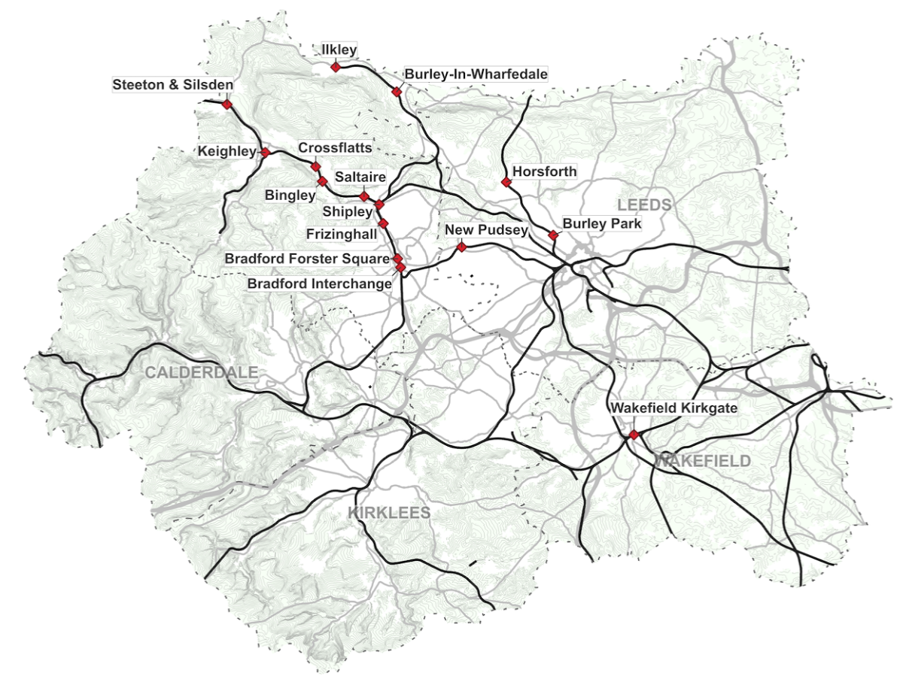
Phase one of these improvements includes 15 stations across Bradford, Leeds and Wakefield. You can see which stations are in phase one by:
Viewing the list below
Viewing the map image below
You can also see the stations and what is planned for each station on our interactive map here or on the map image below. Please be aware this function may not be compatible with screen readers. You can see exactly what's happening at each station by clicking here
Stations listed for improvements in phase one | |
|---|---|
Bingley | Ilkley |
Bradford Forster Square | Keighley |
Bradford Interchange | New Pudsey |
Burley in Wharfedale | Saltaire |
Burley Park | Shipley |
| Crossflatts | Steeton & Silsden |
Frizinghall | Wakefield Kirkgate |
Horsforth | |
What accessibility improvements could be installed
The list below shows the type of accessibility improvements to be installed, although these will vary by station. To see exactly what improvement we plan to install at which station, please view the interactive map here or a full list of improvements here
To see what these improvements look like, please see our glossary here
| Accessibility specific improvements |
|---|
Braille Station Maps |
Help Points |
Induction Loops |
Accessible facilities signs |
Handrails with Braille - directions, routes and level changes |
Tactile paving on stairs and ramps |
Other improvements |
|---|
Anti-slip stair edging |
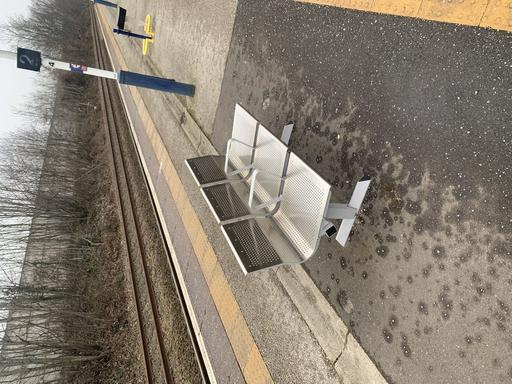
Seats inside |
Seats outside |
Project objectives and benefits
Improving accessibility is an important part of improving rail journeys for all existing customers, as well as attracting new ones.
This work aims to:
Make stations accessible and fit for purpose through targeted improvements and replacement of facilities not meeting industry standards
Encourage more people to travel by rail
Improve access to jobs, education, leisure and health services
Improve the customer’s overall journey experience
How this project is funded
Subject to a successful business case, phase one of the Rail Accessibility Package will be delivered through funding provided to the Combined Authority by HM Government. The funding for this scheme is known as capital funding; this means it can only be spent on schemes to deliver new or improved infrastructure. The cost of phase one (15 stations) is expected to be £5 million. Subsequent phases of works are expected to be funded by Northern.
Inflation costs have impacted the scope of work that is achievable within the current budget for the Rail Accessibility Package. To address this, the Combined Authority and Northern worked together to review the scheme and agree on the most impactful changes that would still meet the schemes goals and stay within budget. As a result, some accessibility improvements and a number of stations were removed from the project, allowing the scheme to continue moving forward. The accessibility improvements that were taken out of scope are still within Northern's ambitions to be delivered as part of future schemes.
Next steps
The Rail Accessibility Package is currently working towards Full Business Case, with aim to submit in Spring 2027 with a decision made in Summer 2027.
Works for phase one are planned to start in late 2027 and be finished by late 2028. This date may change because it is dependent on the specific approvals processes and the availability of funding.
If you would like to keep informed on updates on this project, please register here to be a part of Your Voice.
-
Glossary
Share Glossary on Facebook Share Glossary on X (formerly Twitter) Share Glossary on Linkedin Email Glossary linkType of improvementDefinitionImageBraille Station mapsA map that can be read through touch. The maps have raised areas that represent various features such as buildings and roads, and various forms of raised shading are used to represent land use. Braille is used for labels.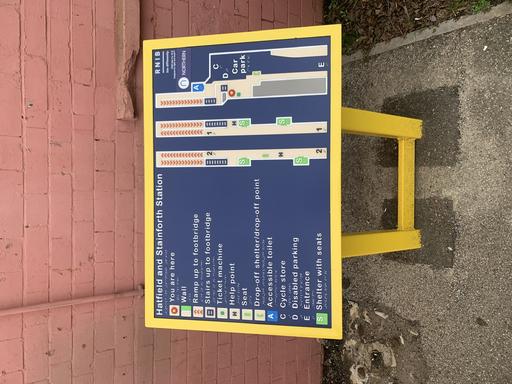 Help PointsHelp points enable passengers to speak to a human operator where station staff are unavailable. Typically found on platforms or concourses, these points feature buttons for general assistance and an emergency line.Induction LoopsAlso referred to as Hearing Loops, Audio Frequency Induction Loops or AFILS, it is an audio technology whch supports improved hearing and communication for people with a hearing impairment.Direction signs to lifts, platforms and accessible routesSigns to provide instructions and guidance for navigating the station, acting as a tool for wayfinding that helps people find their way to a destination .Accessible facilities signsSigns to provide instructions to locate accessible facilities like accessible toilets.Handrails with Braille (directions, routes and level changes)A fixed rail for support that incorporates Braille instructions or guidance to navigate the station.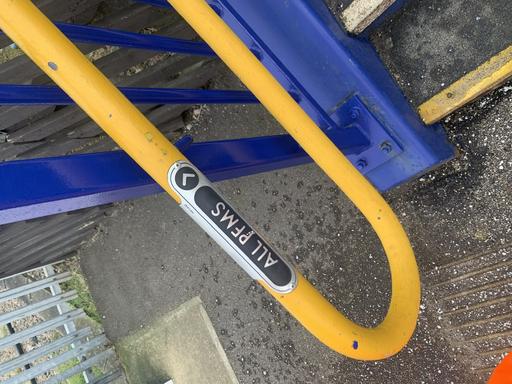
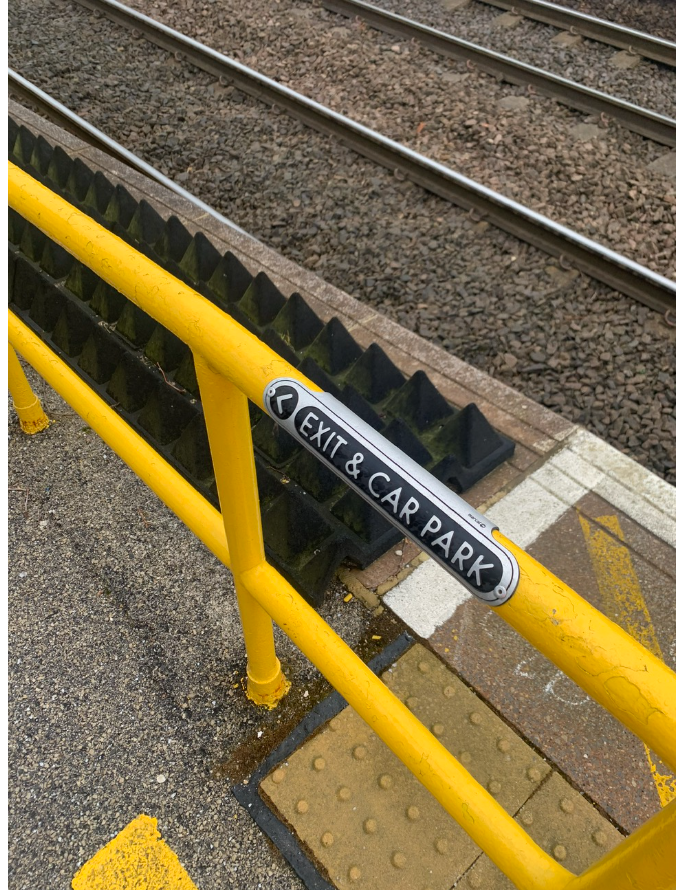 Tactile paving (on stairs and ramps)Textured, raised ground surfaces designed to provide physical cues to blind and visually impaired people, helping them detect hazards like street crossings, stairs, and platform edges.Anti-slip stair edgingSafety strips on the edge of stairs to prevent slipping.Seats insideAreas to sit or rest inside.Seats outsideAreas to sit or rest on the platform or other external area.