

Glossary
CLOSED: This discussion has concluded.
| Term | Definition | Image |
| Footway | The technical term for a ‘pavement’ or ‘footpath’. A way or path for people travelling on foot and the portion of any road which is provided primarily for use of people walking and not for vehicles. |
 |
| Parallel or Toucan Crossing |
A parallel crossing is a combined pedestrian and cycle crossing which has a priority over the road which is crosses. It consists of a zebra crossing with a parallel priority cycleway. |
 |
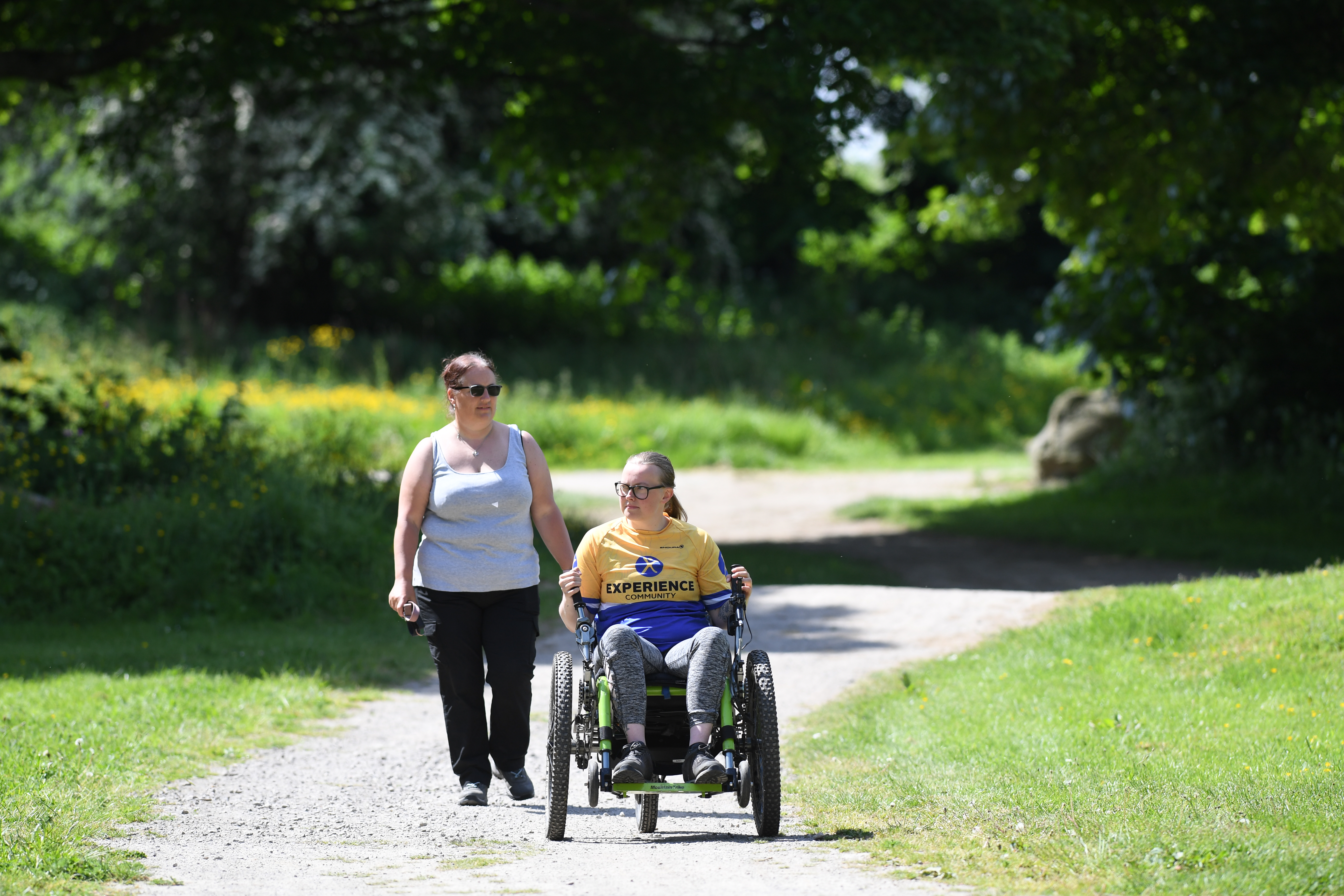
| Pedestrian |
A pedestrian can be described as a person/people walking or a person/people on foot. The terms pedestrian and walking include people using mobility aids such as wheelchairs and mobility scooters designed for use on the footway, and people with physical, sensory or cognitive impairments who are travelling on foot. |
 |
| Shared use cycle/ footway |
An area open to the public that is designed for the use of both people riding bikes and people on foot. Shared paths can be identified by signs and/or pavement markings showing a pedestrians and bike. Shared use footpaths can also be completely unsegregated. |
 |
| Tactile paving | Paving with raised bumps that can be felt underfoot. This aids visually impaired and blind people to navigate. Those with less severe sight loss can also use the product’s colour coding to access extra information about their surroundings: Red at controlled crossing points Buff (beige/yellow) used as a warning at uncontrolled crossing points |
|
| Textured buff corduroy paving |
Paving with textured raised ridges (similar to a corduroy pattern) that can be felt underfoot to help warn visually impaired and blind people of the presence of specific hazards, such as steps or level crossings, as they make their way round on foot. The raised ridges can also be seen and felt by people riding bikes to warn of boundaries (extent) of a shared space for people on bikes and people on foot e.g. at a Toucan crossing point |
Share Glossary on Facebook
Share Glossary on X (formerly Twitter)
Share Glossary on Linkedin
Email Glossary link
Thank you for your feedback, this consultation has now concluded.
Your feedback has now been analysed and the outcome report can be found here. A summary of the findings can be found here.
This report will be considered by the project team as they further develop the proposals before submitting Full Business Case, expected in spring 2026.
